
Breast Enhancement (Augmentation) San Diego
Breast Augmentation
Breast augmentation is a powerful change for many women. Dr. Laverson specializes in proportionate augmentation for young women who need a 1 or 2 cup size enlargement, and in restoring breast volume and shape after post-partum (pregnancy related) deflation of the breasts. You’ll try on implant sizes and styles in the office, and will choose the ones that are right for you
before the procedure. We don’t believe in the doctor choosing your implants, although he will provide all the information you need to select what is best for you. Your procedure is planned to meet your unique needs and accommodate your preferences. For every woman, our goal is sensually beautiful contour and symmetry, appropriate size and texture, hidden or invisible scar, preservation of nipple sensation, and prevention of implant related problems. At Feel Beautiful, we know you’re not coming to an expert like Dr. Laverson for breast implants; any surgeon can do that. We understand your desire for beautiful breasts, and this requires more that just inserting implants. Dr. Laverson incorporates a series of preventive measures during each breast augmentation procedure to avoid problems that many other surgeons encounter routinely. He plans your procedure carefully and works diligently to get it right the first time. Learn about technical aspects of breast augmentation that differentiate Dr. Laverson’s approach HERE.
Breast Augmentation is NOT a “one size fits all” procedure. There are so many individual considerations, YOUR procedure will be designed to meet YOUR needs.
Call 760-753-6464 for your no obligation appointment NOW! Bring the largest non-padded bra you have to try on implants. Simulate your breast augmentation in photo-realistic 3D by seeing what your body will look like with different sizes using the PORTRAIT imaging platform in our office. Financing available.
Watch Breast Augmentation Procedure HERE
Online Simulator and Procedure Video HERE
Before and After Breast Augmentation Photos HERE
Preparation for Breast Augmentation, and Decisions You’ll Make with Dr. Laverson
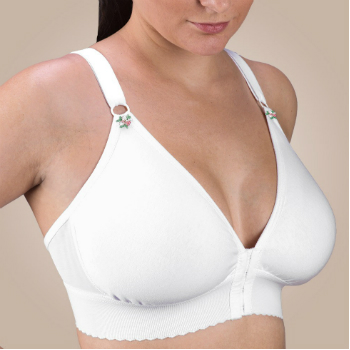
Any lump or mass in the breast must be examined (by mammography and your physician) before getting implants. Augmentation is generally not advised until at least several months after breast feeding/breast milk is finished, and breasts have been stable in size for two months. Dr. Laverson will provide povidone-iodine, chlorhexidine gluconate, or another solution you should shower with to disinfect your skin the evening before or morning of your procedure. SOAK the breasts with this solution, including around the nipples, beneath the breasts, under your arms, and all of the skin on your chest from the neck down to and including belly button. Fill your pain medicine (analgesic) prescription before your procedure, because you will need this shortly after arriving home. Dr. Laverson applies a high quality supportive Marena bra before you awaken from anesthesia. Adjust hook and eye shoulder and front fastening chest straps for comfort. You may remove the bra to shower. Expect swelling around the implants, most significantly for two weeks following implant placement, then gradually resolving for several months. Report any significant size and/or pain difference between right and left sides to Dr. Laverson immediately.
Breast Augmentation Decisions
The simplest, most predictable method of enlarging the female breast is to create a defined space behind the existing breast, and to insert a specially designed implant into that space. The procedure is safe, brief, and when performed by an expert surgeon with proper attention to detail, creates beautiful breasts in the vast majority of cases.
Breast augmentation is one of the most commonly performed aesthetic procedures. Women presenting for augmentation fall into two categories: Those whose breasts never developed to the size and shape they desire, and those whose breasts excessively diminished in size after pregnancy. The procedure is similar for women in both situations, but because of skin stretching associated with pregnancy, there is generally more skin to accommodate an implant after childbirth.
Good Results
There are many nuances besides just putting in an implant to create a beautiful breast with implants. Dr. Laverson believes a good result includes breast size that is proportionate with the woman’s body, and that she is pleased with. Breast shape should be natural, not too artificial appearing. Shape includes implant positioning to avoid excessive space between the breasts and a normal relationship between the centrally located nipple and the inframammary fold (curved contour demarcating the bottom of the breast mound). Texture of the breasts should be soft. Symmetry (right and left sides similar in appearance), obscure scars, nipple sensation, and absence of implant related factors such as rippling and wrinkling are also important.
Choosing Size
Implant volume is selected as a function of implant dimensions.
The four factors considered when choosing implant size are: 1. Desired breast size. Your desired cup size tells Dr. Laverson how large you want to be, and this affects the implant size chosen. 2. Pre-existing breast size. If a you are A cup and wants to go to D cup, a larger implant will be required than if you are B cup and want a full C. The larger the breasts are before surgery, the smaller implant will be required to achieve the desired size. 3. Skin envelope. It is easier to insert a large implant if breast skin is loose than if it is tight. Quality of breast skin envelope is partly inherited, and partly a result of breast life cycle changes. The post-partum and aging breast has a more relaxed skin envelope. By diminishing fat content and breast volume, significant weight loss also loosens breast skin. 4. Breast width. The implant selected must match your breast width. If the implant is too narrow, a wide space between the right and left breasts (intermammary space) may result. This leads to an artificial appearance. If the implant selected is too wide, it will encroach on the midline (symmastia), lower the inframammary fold and encroach on the waist making you appear heavy, and encroach laterally interfering with arm motion and stretching (or cutting) nerves to the nipple, diminishing nipple sensation.
Once implant width (diameter) of a round implant is selected, the only other dimension to be chosen is projection, or profile. The profile of the implant is its height, and determines, in the standing position, how far forward the breasts will project. For each given width (diameter), implants are manufactured in a variety of profiles (projections) to meet the needs of most women. Low profile implants are more flat, pancake shaped. Higher profile implants are more spherical, or globular. Full profile implants project the most.
During breast augmentation consultation, Dr. Laverson offers women sample implants in a variety of sizes to try in a non-padded bra beneath a snug fitting shirt. This helps women determine their favorite look. Also, he performs photo-realistic 3D surgical simulation with Axis Three Portrait technology. Your 3D photo in Dr. Laverson’s Portrait computer can be augmented with the implants you select. You will compare your expected appearance with different implants before the procedure, assisting you to select the implant size and shape you are most pleased with. Additionally, Dr. Laverson reviews before and after photos of patients who have been augmented with different implant sizes and shapes to give you an idea of your expected outcome. All of these methods combined result in a very high level of patient satisfaction with final breast size, and mimimize the chance of unhappy surprises.
![]()
Patients often ask for the most natural result, and Dr. Laverson also wants the breasts to look, feel, and behave as naturally as possible. Women should understand the size decision influences this. Implants are not biological, but are synthetic mechanical devices. The quality of the final result depends in large measure upon the proportion of the final breast volume that is implant vs. your own tissue. The greater the proportion of your final breast volume that is implant, the more your breasts will look, feel, and behave like implants. If 50% of your breast volume is implant, this will produce a more natural result than if 90% of your breast is implant. The larger your implant, the more your breast will look, feel, and behave like an implant. Skin stretching, visible rippling or wrinkling, nipple numbness, and firm texture become more likely with larger implants. That being understood, most women can achieve very natural results in most respects even augmenting two to three cup sizes, depending on compliance of skin envelope and other factors.
In the end, because it is your body and because you should be pleased with your result, Dr. Laverson will use implants that YOU choose, provided the choice is reasonable. Aesthetic judgment plays a role, and there are many different ideas about what constitutes beauty. It is Dr. Laverson’s preference not to treat the breasts in isolation, but to create harmony, balance, and proportion between your breasts, your face, and other parts of your body. Like comfortable and classic fashions, they must fit you well, and flatter you.
Choosing Shape – Round vs. Anatomic
Depending on your existing breast shape, your desired result, your skin quality, and the contour of your ribs and chest, anatomic shaped implants with a tapered upper edge may be more desirable than round implants. Anatomic shaped implants behave differently in your body than round implants. While round implants tend to assume an anatomic shape when upright, the fullness they maintain at the upper breast depends on your skin surface area, skin elasticity, volume of your natural breast, and distribution of your breast tissue. Shaped implants are less fluid, so the upper portion of the implant (as shown in the photo here) when upright does not settle down gravitationally. For someone with a tighter skin envelope, a round implant will maintain fullness of the upper breast in standing position. For women with a relaxed skin envelope, the shaped implant maintains fullness of the upper breast when standing better than most round silicone gel breast implants. Anatomic shaped implants may have a round base, an elliptical base with a horizontal axis for women with wide breasts and/or a broad chest, or an elliptical base with a vertical axis for tall women or women desiring naturally sloping fullness of the upper breast. To maintain their anatomic shape, these implants are filled with cohesive or highly cohesive silicone gel, and have a thick and/or “gummy bear” type consistency. These implants provide predictable shape and projection, and are available in sufficiently large variety of shapes and sizes to fit the vast majority of breasts very well.
One disadvantage of anatomically shaped implants is that because they’re less pliable, they cannot be passed through a small opening and properly oriented, so insertion through the armpit or a small areola are not recommended. Round implants with higher profiles produce a globular breast shape that is desirable for many, but they do not fit all breasts well. If there is mild post pregnancy settling down of the nipple toward the lower breast, shaped implants may better permit augmentation without a formal breast lift. Dr. Steve Laverson has worked extensively with both round and with anatomically shaped saline and silicone gel implants, and will suggest the device that best matches your situation and your preferences.
Breast Implant Options – Gel vs. Saline
In addition to choosing size, there are several types of available breast implants (prostheses). Dr. Laverson uses implants manufactured in compliance with the highest industry standards, and uses only FDA approved prostheses. The two manufacturers in the United States are Allergan and Mentor. All available prostheses have a solid silicone shell. Although solid, the shell is thin so that the feel or consistency of the implant depends almost entirely on the fill substance inside. Within the shell is a fill substance that gives the implant its consistency and maintains its shape and volume. The two available fillers are saline (salt water), and silicone gel. A third filler, semi-solid silicone, is now awaiting FDA approval.
Saline (salt water) implants are packaged sterile from the factory, and are delivered to Dr. Laverson as an empty solid silicone shell. During breast augmentation surgery, these saline implants are carefully removed from their package, all air within the sterile implant evacuated, and the implant then inserted in a space behind the breast. The implant is inflated with sterile biologically compatible iso-osmolar (identical to human plasma) salt water to its recommended fill volume through a specialized valve. The implant is positioned and oriented properly, and the patient examined in the sitting position to be certain of a satisfactory result.
Silicone gel implants are also packaged sterile from the factory, but have no valve, and are delivered to Dr. Laverson completely filled to the selected size with soft silicone. At surgery, these implants are removed from their packaging and inserted into a space behind the breast. The result is immediately apparent because the implant comes pre-filled.
Some women prefer saline implants, and gel is more suitable for others. They are both high quality implants, and none proven to last longer. Saline implants are less expensive. For women with B cup breasts and larger, Dr. Laverson believes the result with saline and gel implants is extremely similar, and essentially interchangeable. For women who are very lean, thin, or small breasted, gel may be preferred because of its slightly more natural texture, and less tendency to produce visible and/or palpable (detectable by touch) rippling in certain positions.
Another important difference between gel and saline prostheses: What happens if the implant shell ruptures? Saline implants deflate as the sterile salt water is absorbed. The woman with saline implants knows almost immediately that the implant has ruptured. She will usually want a new implant as soon as possible to replace the deflated one. Both implant manufacturers (Allergan and Mentor) provide a warranty on their prostheses, so save your implant information in order to get an identical replacement if one side deflates. If a gel implant ruptures, the thick gelatinous cohesive silicone gel does not leak out, but is contained within the implant shell and the surrounding capsule of scar. Most women with ruptured gel implants do not know immediately of any problem. For this reason, implant manufacturers and the FDA advise women with gel implants to check implant integrity periodically with an MRI (magnetic resonance imaging) study. While recommended, these studies are NOT required. It is strongly recommended however, that if you discover your gel breast implant has ruptured, it should be removed or replaced.
Breast Implant Options – Textured vs. Smooth
Breast implants (prostheses) all have a solid silicone shell. The surface of this flexible solid shell may be smooth or rough (textured). Smooth surface implants appear translucent and glossy, while textured surface implants have a rough surface and opaque, ground glass appearance. Dr. Laverson demonstrates both of these implant types at consultation. Textured and smooth surface implants both may be filled with silicone or with saline. Differences in behavior (implant-tissue interaction) between smooth and textured surface implants have been studied only on a limited basis, and both are acceptable to use in most situations.

Smooth Surface Silcone Gel Breast Implant
Because of the rough surface of textured implants, Dr. Laverson has observed they are more likely to stay exactly where he puts them during breast augmentation. He believes they are less likely to drop after surgery, and less likely to deviate laterally when placed beneath the pectoralis (chest) muscle. Dr. Laverson prefers textured implants when placing the devices beneath the pectoralis muscle. The implant is wedged between muscle in front and the curved ribs behind. Contraction of the muscle during use of the arms applies force to the front of the implant and on its inner aspect, tending to push it out toward the side and down. The capsule your body forms around a textured implant surface grabs the rough surface and like a tire with a deeper tread, resists this downward and outward force. The smooth surface implant slides more easily and with its lower coefficient of friction may be more prone to displacement when placed beneath the pectoralis major muscle.

Textured Surface Silicone Gel Breast Implant
Smooth surface implants however, probably have an advantage when the implant position is subglandular (in front of the pectoralis major muscle). To produce a soft implant that assumes a natural shape, the implant shell is not filled to capacity during the manufacturing process. This allows the implant to shift its shape like the natural breast with changes in body position. Normal behavior of the implant is to wrinkle slightly at the top because of this underfill. In thin, lean women, women with large implants, and women with implants in subglandular position, these implant wrinkles may be transmitted to the skin, which produces a very artificial appearance, and discloses the presence of implants. This tendency is magnified when a textured surface prosthesis is subglandular, because the textured surface grips the capsule, which is attached to overlying soft tissue and skin. Thus, when a superficially placed textured implant ripples, these ripples may be more visible on the skin surface than if the superficially placed implant is smooth, and less likely to be adherent to the capsule.
Depending on your body type, your lifestyle, your preferences, and the size implant you select, Dr. Laverson may recommend smooth surface or textured surface implants. There is no cost difference.
Breast Implant Placement – Subglandular vs. Submuscular

Actual Patient, 2 weeks after augmentation
The pectoralis major is a roughly triangular shaped muscle covering the upper front of the chest, beneath the upper inner portion of the breast gland. The lower outer portion of the breast is on top of another deeper muscle, the serratus anterior. The pectoralis major is a powerful flat muscle which has a broad origin from the collarbone above, the sternum (breastbone) in the middle, and the ribs below. Pectoralis major muscle fibers converge upward and laterally in front of the ribs to form the front border of your armpit, then insert on the upper inner arm bone, the humerus.
Breast implants are not natural, but are synthetic mechanical devices. They do not behave 100% naturally. As such, it may be advantageous to bury the implants as deeply as possible behind the breast to camouflage their imperfections. For this reason, one popular technique is to lift the lower part of pectoralis major muscle, develop a pocket for the implant beneath this muscle, and place the implant within the “submuscular,” or “subpectoral” pocket. This actually results in a “dual plane” position, meaning the upper inner portion of the implant is beneath pectoralis muscle, while the lower outer portion, because it extends below the lower margin of pectoralis muscle, is beneath the breast gland.
The alternative to submuscular or dual plane positioning is the “subglandular” position. This means the implant is placed in a pocket behind the breast gland, entirely on top of the pectoralis major muscle. There are advantages and disadvantages to each of these alternatives.
Submuscular positioning may be preferred for very thin, lean women. The implant is better camouflaged. Edges and rippling of the implant may be less visible. When a breast lift is simultaneously performed, submuscular implant placement may be preferable to preserve blood supply to the overlying breast. On the other hand, if the breasts are slightly sagging and you need a lift effect from the implant, subglandular placement may be preferred because the lifting effect of the implant is not restricted by overlying muscle. Subglandular placement avoids disturbing implant “animation.” Animation is implant movement with contraction of overlying pectoralis muscle. Women who compete athletically or are very active with their upper body may want to avoid manipulation of the muscle, and the movement of their breasts that may accompany arm movement when implants are placed beneath the muscle.
Another word about the space developed behind the breast and perhaps behind the pectoralis muscle for implant placement. This space is often referred to as a “pocket” for the implant. The location and size of the pocket are important. Attention to detail during your procedure contributes to subtle aspects affecting the quality of your result. During surgery, if the bottom of the pocket is opened too widely, implant position may be too low. If the bottom of the pocket is not opened sufficiently, implant position may be too high. If the pocket is too large, the implant may displace. If the pocket is too small, edges of the implant may be visible, and the small pocket may squeeze the implant causing visible rippling or wrinkling. If the implant is submuscular and the inner edge of the pectoralis is not divided enough, animation may be excessive, and/or the implant may laterally displace (move to the side) producing a wide space between the breasts. If the pectoralis is divided too much, the lower inner edge of the implant may end up beneath skin only, resulting in visible rippling and wrinkling exactly where many women want a sexy and beautiful cleavage.
Other elements, most notably your skin elasticity and how much the skin stretches after surgery, affect your result, but can be unpredictable and uncontrollable. In any case, because of all these technical details, the surgeon must develop the implant pocket extremely carefully for the best outcome.
Approaches for Breast Augmentation – Peri-areolar vs. Inframammary
The two most popular approaches for implant insertion are through an opening at the rim of the areola and through an opening in the crease at the bottom of the breasts. Each approach has advantages and disadvantages. If the areola is very small, Dr. Laverson prefers to avoid it. If the woman plans to have children and may breast feed them, Dr. Laverson likes to avoid the areola. If the areola has a poorly defined or irregular border that may not conceal a scar well, it is preferable to choose another approach. If sensation of the nipples is very important from a sexual standpoint, Dr. Laverson avoids the areola. Additionally, capsular contracture may be more likely if the implant is placed by the areola approach. Bacteria living within breast ducts are more likely to seed the implant pocket when these ducts are opened during surgery. The largest ducts are near the areola, and will be avoided by other approaches.
If the inframammary crease is poorly defined, asymmetric, or must be lowered an indeterminate amount to achieve a good result, the areola may be the preferred approach. If a peri-areolar breast lift is to be performed with the augmentation, there is no need for an additional inframammary (beneath the breast) scar, and the areola approach is preferred. If the areolae are large and darkly pigmented with a well defined border that will conceal a scar well, the areola approach is favored. If uncertain whether or not breast lift may be necessary, areola approach may be favored as well. Some women prefer one scar location over the other based on swimsuit styles they like, or other considerations. For many women, either approach is suitable. If you are among them, Dr. Laverson will leave the decision entirely to you.
Breast Re-shaping
Many women are not happy with the shape of their breasts, or have asymmetric breasts (right and left breasts are different sizes), inverted nipples, and other problems that can be improved with special techniques. The normally shaped breast is a round or elliptical soft mound with sensuous curves and a pigmented areola centrally located with the nipple projecting above the level of surrounding areola. This robust, appealing, youthful breast contour, symmetrically sized on right and left, is the goal of most breast procedures, regardless of the starting point. The possibility of achieving beautiful breasts is affected by your anatomy, available implants, the size and location of scars necessary to fix existing problems, and other factors.
Additional Information available at the following links:
FAQs (Frequently Asked Questions)
How much can my breasts be enlarged? Why is it limited? How big should I go?
Implant size is determined by the patient’s wishes, the width of the existing breast and available skin envelope. Dr. Laverson can help you determine the best size of implant for you at the time of your consultation. Most patients desire a full proportional look. They want something nice but not too obvious. It is generally preferable to create nice looking breasts that fit a patient’s body well rather than very large breasts that are too large for the frame.
Do you put the implant under or over the muscle?
There are advantages and disadvantages to each implant position. Most often, Dr. Laverson puts the implant behind or under the pectoralis major muscle. The resulting breast shape and texturing may be more natural and less rippling visible. Mammograms may easier and perhaps less chance of capsular contracture when the implant is under the muscle. However, implants beneath the muscle may be subject to undesirable “animation” with certain activities.
Will I be able to breast feed after augmentation?
There is evidence that breast augmentation may diminish a woman’s capacity to breast feed by an estimated 7-14%.
Why did my breasts get small and droop after pregnancy?
A loss of volume and drooping are common after pregnancy. It is called post-partum breast involution. Volume loss with a small amount of sagging can be corrected with breast augmentation surgery. For an excessive degree of sagging, a mastopexy or ‘breast lift’ may be indicated.
Can plastic surgery correct inverted nipples?
With inverted nipples, the problem is that the ducts are too short and tether the nipple. This can be corrected in the office under local anesthesia. The procedure is fairly simple. The incision is small and located on the underside of the nipple so that it is difficult to see.
Can I enlarge or reduce the size of my areola?
The areola can be reduced in size or enlarged. This may be done as a standalone type of procedure under local anesthesia. Or, it may be done in conjunction with an augmentation, reduction or lift.
Can breast implants rupture?
Mechanical failure of the mammary implants is possible. The rate of failure is low and should be discussed with your surgeon, including the implant manufacturer’s limited warranty.
Do I have to have my implants changed after a certain number of years?
You will not need to change your implants unless there is a problem. Depending on the manufacturer, implants are warrantied for 5-10 years. If implants deflate during the warranty, the manufacturer will give you an implant and pay towards replacement.
Can you correct asymmetries or differences between the breasts?
Nearly everyone has some asymmetry in their breasts. There may be a difference in size, shape, projection of the nipple, amount of drooping, etc. Asymmetries can be improved by lowering a fold, place a larger implant on one side, etc. Most of the time there are subtle asymmetries before and after surgery.
Can breast implants cause breast cancer?
No. Breast implants do not cause breast or any other cancer. Studies have shown that women who get breast cancer and have implants have the same outcome as women that get breast cancer and do not have implants. Always get mammograms as recommended by your physician. Notify your mammographer that you have implants as they will do a few special views to optimize the mammogram.
Take a look at our Frequently Asked Questions about Cosmetic & Plastic Surgery